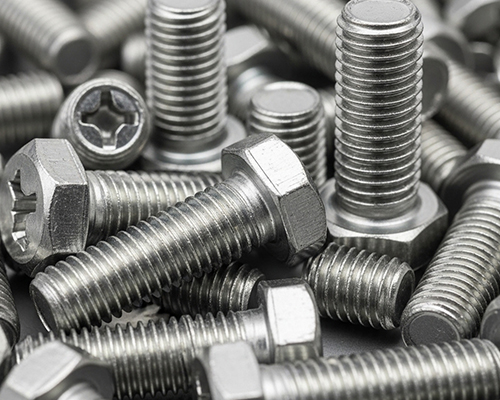
The huge demand for new and improved fastening solutions that are repaid in the form of strong, smart, and sustainable technologies, along with tech cities, renewable energy projects, heavy engineering,g and seismic-resistant structures,s has led to rapid evolution in the foundation bolts manufacturers today. Foundation bolts previously treated as routine parts are already checked for efficiency and safety before being installed, and their life span is determined accordingly. To keep up with future demand, bolting manufacturers are putting their money into new-age materials, automation, and exact engineering. Grasping these forecasts from the industry can give one a clear view of the transformed manufacturing, design codes, and expectations for projects in the next ten years.
Current Landscape of the Foundation Bolts Manufacturing Industry
The manufacture of foundation bolts is heavily influenced today by huge construction projects, factories, and the modernization of infrastructure. Thus, the manufacturers of foundation bolts are coping with the high and consistent demand while meeting the rising quality, compliance, and customization expectations.
- Excellent demand from sectors such as infrastructure, power, and heavy engineering
- Concentration on precision machining and production that conforms to standards
- Rivalry in the market between local and international foundation bolt manufacturers is growing
Infrastructure Expansion and Its Impact by 2030
By the year 2030, the tremendous expansion of infrastructure will be a main factor that will change product design and planning of capacities considerably. The producers of foundation bolts expect continuous demand coming from smart cities, clean energy, and transport schemes.
- Increase in mass transit, major roads, and industrial zones.
- More demand for load-bearing and longevity
- Negotiated supply contracts for the long term, affecting the production approach
Shift Toward High-Strength and Specialized Foundation Bolts
The fastening industry is projected to evolve from normal bolts to engineered fastening solutions around the year 2030. The makers of foundation bolts are progressively coming up with new products that are strong and specially made for certain applications.
- Seismic-resistant and heavy-duty foundation bolts are in great demand.d
- Application in wind turbines, bridges, and offshore structures
- Increased focus on performance testing and reliability
Material Innovation: What Makers Expect by 2030
Innovation in materials is destined to be the main factor in product development across the board. Makers of foundation bolts are putting their money into new alloys and materials that resist rust to stay in line with the gradually changing requirements for projects.
- Alloy steel and high-tensile materials will be used more and more.
- Corrosion, heat,t and fatigue resistance will be improved.
- Eco-friendly criteria will be the basis for material selection
Automation and Smart Manufacturing in Foundation Bolt Production
The production of foundation bolts is being revolutionized by automation. The manufacturers of foundation bolts are utilizing modern manufacturing technologies to make their processes more efficient and their products more uniform.
- CNC machine along with robotic handling systems
- Automated inspection and defect detection powered by AI
- Increased output along with fewer human mistakes
Sustainability and Green Manufacturing Practices
The eco-friendly and sustainable production methods are becoming the main production strategy in the fastening industry. Consequently, not only have they become indispensable but also an essential component of the overall operational strategy.
- Selection of energy-efficient devices to minimize electric power consumption
- Coating of surfaces with environmentally safe and low-emission substances
- Minimizing the materials waste by using the best production planning techniques
- A principle of using more recyclable and less derived materials
- Implementation of water-saving and waste-management practices
- Meeting the environmental rules and obtaining green certifications
- Trying to decrease the total carbon footprint in all manufacturing places
Digital Design, Simulation, and Testing Advancements
To be more precise, safety and efficiency in product development, digital technologies are getting widely accepted by manufacturers of foundation bolts. With the help of advanced design and testing tools, manufacturers can already predict the performance of their products in real-world situations and thus are able to identify errors and enhance reliability.
- Application of state-of-the-art CAD software for accurate foundation bolt design
- Computer-based simulation to assess load-bearing capacity and stress distribution
- Simulated testing for seismic, vibration, and fatigue performance
- Accelerated prototyping via digital modeling and validation
- Less material waste and reduced costs for development
- Consistency and quality control in production batches have been improved across the board
Quality Standards and Global Compliance Expectations
With an increasing number of global construction and infrastructure projects being subject to regulations, the manufacturers of foundation bolts are forced to conform to the higher quality and safety standards set by the authorities. No earlier than the year 2030, companies will only be able to enter the market, gain customers' trust, and sustain their business through compliance with international standards.
- ISO, ASTM, DIN, BS, and EN are examples of international rules
- Mandatory material traceability and batch-wise documentation
- Strict mechanical and chemical testing requirements
- Enhanced third-party inspection and certification processes
- Adoption of digital quality management systems (QMS)
- The demand for mill test certificates (MTCs) and inspection reports has skyrocketed.
- The need to be audit-ready and the demand for regulatory transparency are now greater than ever.
- Alignment with project-specific and country-specific compliance norms
Customization and Project-Specific Manufacturing Trends
By increasingly going in the direction of personalized and project-specific solutions, foundation bolt manufacturers are trying to meet the intricate requirements of modern infrastructure and industrial projects. No longer can the standard products be used for the specialized applications, thereby making customization the crucial differentiator.
- EPC contractors and consultants work together with manufacturers to develop foundation bolts customized for the specific conditions of load, soil, and structure.
- Custom-made foundation bolts are produced according to drawings, specifications, and performance requirements.
- Different dimensions and grades are available for various projects: a variety of diameters, lengths, thread types, and material grades are provided for specific projects.
- Sectors like wind energy, bridges, heavy machinery, and seismic zones get their very own high-quality foundation bolts.
- With proper planning and nimble production models, the delivery of customized orders is quicker.
- Specific project testing and inspection are done for technical standard compliance, thus enhancing quality control.
Regional Growth Markets and Global Expansion Strategies
Foundation bolts manufacturers are searching for new markets to maintain their growth and to fulfill the global infrastructure demand:
1. Emerging Asian Markets
Fast urban growth and industrialization in India, China, and Southeast Asia are the major factors of demand for high-quality foundation bolts.
2. Middle East Expansion
Huge energy, infrastructure, and commercial projects are the main reasons for specialty bolt solutions.
3. African Infrastructure Development
Transportation corridors, ports, and power generation projects are the main areas where bolt demand rises.
4. Export Opportunities
Manufacturers are entering into partnerships with foreign companies and setting up local distribution in order to stay in line with world standards.
5. Localization Strategies
Establishing regional manufacturing plants to cut down costs, enhance lead times, and meet local norms.
Challenges Makers Anticipate Toward 2030
Foundation bolts manufacturers are getting ready for several difficulties that may influence the areas of production, innovation, and profit:
1. Raw Material Price Volatility
The production costs are being affected by the ups and downs in steel and alloy prices.
2. Skilled Labor Shortages
The entire industry is experiencing the unavailability of skilled labor for precise manufacturing and automation.
3. Technological Adoption Costs
The cost for the companies to go for AI, CNC, and smart manufacturing systems will be really high.
4. Sustainability Compliance
The company has to comply with the environmentally-friendly regulations; thus, it has to manage its operational costs carefully.
In the present circumstance, domestic competitors and foreign rivals aim to stay ahead by developing better and cheaper products.
Conclusion
In the year 2030, foundation bolt manufacturers will be working in an environment that is more advanced, sustainable, and driven by technology. The interaction of infrastructure expansion, material innovation, automation, and stricter quality standards will completely transform the manufacturing process. The manufacturers that will invest in smart production, customization, and global compliance will not only be able to satisfy future industry demands. But also has a cutting-edge advantage of being a step ahead in the ever-changing construction and engineering landscape.
FAQs
The main reason is that the infrastructure lifecycles are long, and the manufacturers have to start innovating today in order to be able to deliver the future requirements in terms of performance, safety, and Viability.
Automation, AI-driven quality checks, and smart makers will together lead to a giant leap in precision, efficiency,y and scalability.
Manufacturers are indeed expecting a very large shift towards project-based and engineered foundation bolt solutions.
Sustainable materials, eco-friendly coatings, and reduced emissions will not only be the industry's best practices but also the basic expectations.
The influence of large-scale projects like smart cities, renewable energy plants, and transportation networks will not only lead to a regular demand, but also be a driver of innovation.

